
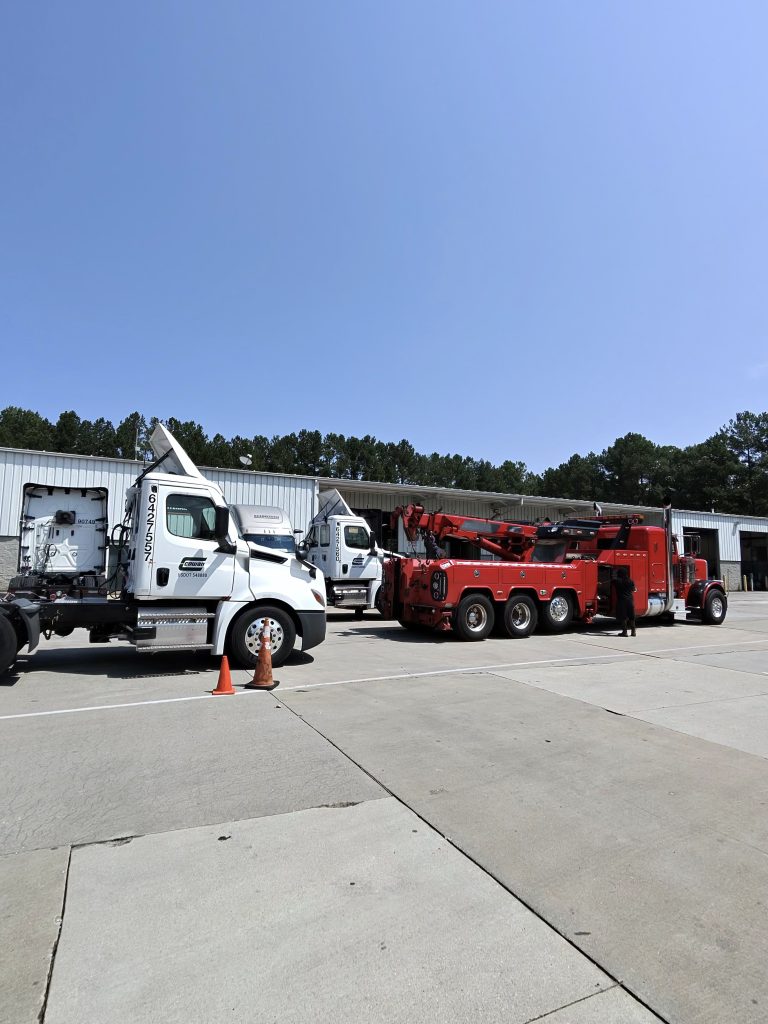
Highways can feel long and lonely, yet freight must still move. When a big rig stops without warning, every minute can cost money, tempers, and a cargo claim. Light-duty tow trucks handle cars just fine, but heavy-duty truck roadside assistance is a different game. Big brakes, tires, and complex systems need trained hands and powerful tools. In the next sections, you’ll see five common emergencies requiring a pro that help drivers stay safe, calm, and ready.
Air Brakes Quit: Why Only a Specialist Gets You Rolling Again
First, picture sixty thousand pounds rolling downhill with weak brakes. Because heavy trucks count on compressed air, a single leak can drain the tanks quickly. Air brake failure often starts with a hiss drivers barely hear, yet it ends with stuck wheels or no stopping power. Therefore, only a certified pro with DOT-rated hoses, chambers, and a high-output compressor should repair the line.
| Part | Failure result | Needed tool |
| Hose | Pressure loss | Crimp kit |
| Slack adjuster | Uneven shoe wear | 9/16-inch wrench |
| Chamber | Locked wheel | Spring break caging bolt |
“If air drops below 60 psi, you’re done.”
Next, the specialist seals the leak, bleeds the system, and then refills the tanks while timing a safe build-up rate. After that, the road is yours again.
PDF Goes into Derate: The Laptop Fix on the Shoulder
Modern diesels run clean, yet soot clogs the diesel particulate filter (DPF). When sensors detect high back pressure, the engine computer cuts power. Soon, speed drops to a crawl. Because a parked regeneration needs dealer-level software, most roadside crews can’t help. However, heavy-duty truck specialists can clear the code, raise exhaust heat, and finish the burn.
Key steps:
- Plug in the diagnostic tool.
- Read soot load percent.
- Start forced regen if safe.
- Clear active and pending codes.
Meanwhile, the tech uses a booster pack to keep the voltage above 12.6 V since low volts cancel the cycle. Afterwards, the driver sees full power, and the load stays on time.
Reefer Unit Stops Cooling: Saving the Load in Time
When a frozen load warms, temp recorders tell the tale, and claims follow. So, a reefer repair truck becomes a hero. First, the tech checks fuel, belts, and fuses. Next, she tests the compressor clutch and alternator output. Because she carries R-404A refrigerant and an EPA card, she can evacuate and recharge the unit on the ramp.
“A berry load can jump ten degrees in thirty minutes.”
Therefore, speed matters. The specialist resets the microprocessor, prints a test report, and watches the box drop to minus ten. Finally, the driver signs and heads out, cargo safe.
Axle or Suspension Breaks: Heavy Tools for Heavy Problems
A pothole can bend a spindle or pop an airbag. Then, wheels sit crooked, tires scrub, and steering fights the driver. Because hubs weigh over 200 lb, only a crane-equipped truck can lift them. The axle damage fix starts with blocking the trailer and then using 20-ton jacks. After that, the technician presses out the old spindle or swaps the airbag.
- Never crawl under a truck held by one bottle jack.
- Chock the opposite wheels.
- Keep the parking brake set on the good axle.
Once new parts sit snug, the tech torques each nut to spec, lowers the rig, and checks alignment with laser gauges. Soon, steering feels smooth, and tire wear stays even.
Big Tire Blowout: Power Tools Beat Hand Wrenches
A truck tire blowout sounds like a shotgun blast. Rubber shreds, mud flaps rip, and sometimes brake lines snap. Because lugs need 500 ft-lb, a small impact gun fails. Instead, a tire service truck brings a one-inch wrench, a 20-ton air jack, and a bead-breaker. First, the driver parks level and calls dispatch. Then, the tech arrives, sets cones, and loosens lugs while the wheel still touches the ground.
Checklist
- Cone the work zone.
- Break lugs with the power tool.
- Jack is only in the frame.
- Inspect the drum for cracks.
After mounting a new 295/75R22.5, he fills it to 100 psi, re-torques after a short roll, and the trip continues.
How Fast Help Protects Your Schedule and Cargo
Time equals revenue. When hours tick by, drivers risk Hours-of-Service violations, spoiled freight, and missed docks. Therefore, keeping emergency roadside issues short prevents higher costs. First, a quick response keeps logbooks legal. Next, swift repairs avoid detention fees. Finally, rapid solutions protect your company’s score with shippers.
FMCSA notes that out-of-service brakes and tires constitute nearly half of roadside violations.
Thus, calling a heavy-duty pro pays for itself in fines avoided alone.
Safety Steps for Drivers While Waiting for Expert Help
While waiting, drivers can cut risk. Because passing traffic whips by at 70 mph, every move counts. Follow these simple rules:
- Pull far right on the shoulder or ramp.
- Set triangles at 10, 100, and 200 feet.
- Wear a high-vis vest before stepping down.
- Stay inside the cab during dark hours.
Meanwhile, keep the dispatcher updated, note mile marker, and log the event. Thanks to these habits, accidents drop, and the roadside crew works without extra danger.
Spotting a Reliable Heavy-Duty Roadside Team Before Trouble Hits
Preparation starts long before the tire pops. Therefore, fleets should build a contact list now. Good questions include:
- Do you offer 24/7 heavy-duty truck roadside assistance within my lanes?
- How fast is the average arrival time?
- Which OEM software licenses do your techs hold?
- Can you handle reefer, hydraulic, and electrical repairs?
- Do you carry work-comp and liability insurance?
After checking references, save the number in every cab. Then, train drivers to call first, not last. Because clear plans reduce panic, lost time shrinks, and freight keeps rolling.
Stay Ready, Keep Rolling
Road life brings surprises, yet smart teams stay ready. From air brake failure to a shredded tire, problems feel big only until the right specialist arrives. Plan, follow safety rules and know who to call. That way, even the worst roadside scare becomes another story for the next truck-stop counter.